
Preparation takes too much time
Before meetings, information from the CRM, email, notes and past activities has to be pulled together by hand.

Sales needs time for customers, not for research, follow-up admin and data entry. Aviando helps you find AI use cases across the sales process, test them sensibly and implement them so your team is prepared faster and follows up more consistently.
Many sales teams lose time every day on tasks that matter but rarely create the most value: pulling together account information, transferring notes, writing follow-ups, scoring leads and maintaining CRM fields.
This is exactly where AI can help. Not by replacing relationships, but by improving preparation, structure and follow-up work. When recurring work falls away, there is more time for conversations and for genuinely developing opportunities.
Before meetings, information from the CRM, email, notes and past activities has to be pulled together by hand.
Tasks, summaries and next steps come up after meetings. If they are not captured right away, the process loses momentum.
Without clear criteria, teams often decide on gut feeling or by who is available.
Data quality matters, but the effort of maintaining it quickly turns into an adoption problem.
If opportunities are not updated cleanly, management lacks a reliable basis to work from.

Authentic, honest, on an equal footing and always aligned with how your sales team actually works.
We start with how your sales team really works: how leads come in, how accounts are prepared and where follow-up work piles up.
We assess ideas by time saved, data availability, process relevance, risk and acceptance within the team.
Agentforce, a custom AI agent or a platform solution. We pick what fits your setup, not what sells the most licences.
AI only becomes helpful when the context is right. We look at data quality, structure and integrations.
Your team understands when AI helps, how to check its results and where human judgement remains decisive.
Not abstract technology, but visible support right where your team works every day.
Instead of pulling information together from the CRM, emails and notes, your team gets a compact briefing: the account, open opportunities, recent activities and contacts at a glance.
Turns a voice note after the meeting into a complete visit report in Salesforce.
Brings an AI development team into your org: from requirement to finished feature.
After the meeting, AI suggests email drafts, next steps and tasks. Your team reviews, adjusts and sends. Consistently, rather than eventually.
AI surfaces patterns: opportunities with no next activity, stalling deals or accounts with high potential. Leaders get a more reliable basis to act on.
Focus on conversation prep: AI summarises account information, open opportunities and relevant notes so teams start better prepared.
Information from the CRM, website, emails and documents is condensed so teams get an overview faster.
After meetings, AI prepares email drafts, next steps and tasks. That makes follow-up more consistent.
Incomplete fields, outdated next steps or missing activities are detected and queued up for maintenance.
Requirements, past proposals and CRM data are turned into structured proposal building blocks.
AI surfaces patterns: opportunities with no next activity, stalling deals or accounts with potential.
Contacts, history and open points in one briefing, ready just before the meeting.
We choose the route that fits your setup, not the one that sells the most licences.
If your sales team works heavily in Salesforce, Agentforce supports tasks right inside the CRM: preparation, summaries, follow-ups and cues for next actions.
If sales information is spread across several systems, a custom agent connects the CRM, documents, email and databases into one usable workflow.
If teams need to learn safe use first, an AI platform with reusable prompts and workflows for typical sales tasks helps.
Not every improvement needs generative AI. Reminders, required fields and routing often remove a lot of friction on their own.
AI in sales replaces neither a relationship nor a good conversation. It improves preparation, follow-up and focus.
The result is not an artificial sales process, but a sales day-to-day with less friction.
We identify concrete use cases and assess them by value, effort, data needs and feasibility.
We check whether Salesforce provides enough context for AI to support meaningfully.
If Salesforce is the right context, we build a clearly scoped Agentforce use case.
If several systems are involved, we build a custom agent for preparation and follow-ups.
We train teams on real tasks from their sales day-to-day. The goal is confident routines.
We connect sales processes, CRM data and workflows so AI does not work in isolation.
After the pilot we look at usage, feedback and impact. The next expansion stages grow from there.
Still unsure which sales use cases really pay off? A structured prioritisation helps.
Clarify strategyWant your team to use AI confidently? It takes training, examples and clear guardrails.
Plan enablementSales data in several systems? A custom agent can be the right way to go.
See custom agentsIf Salesforce is the central place to work, we review concrete Agentforce use cases.
Review AgentforceIf CRM processes are not yet clean, we improve the foundation first.
Build the CRM foundationMany sales use cases are closely tied to campaigns and lead nurturing.
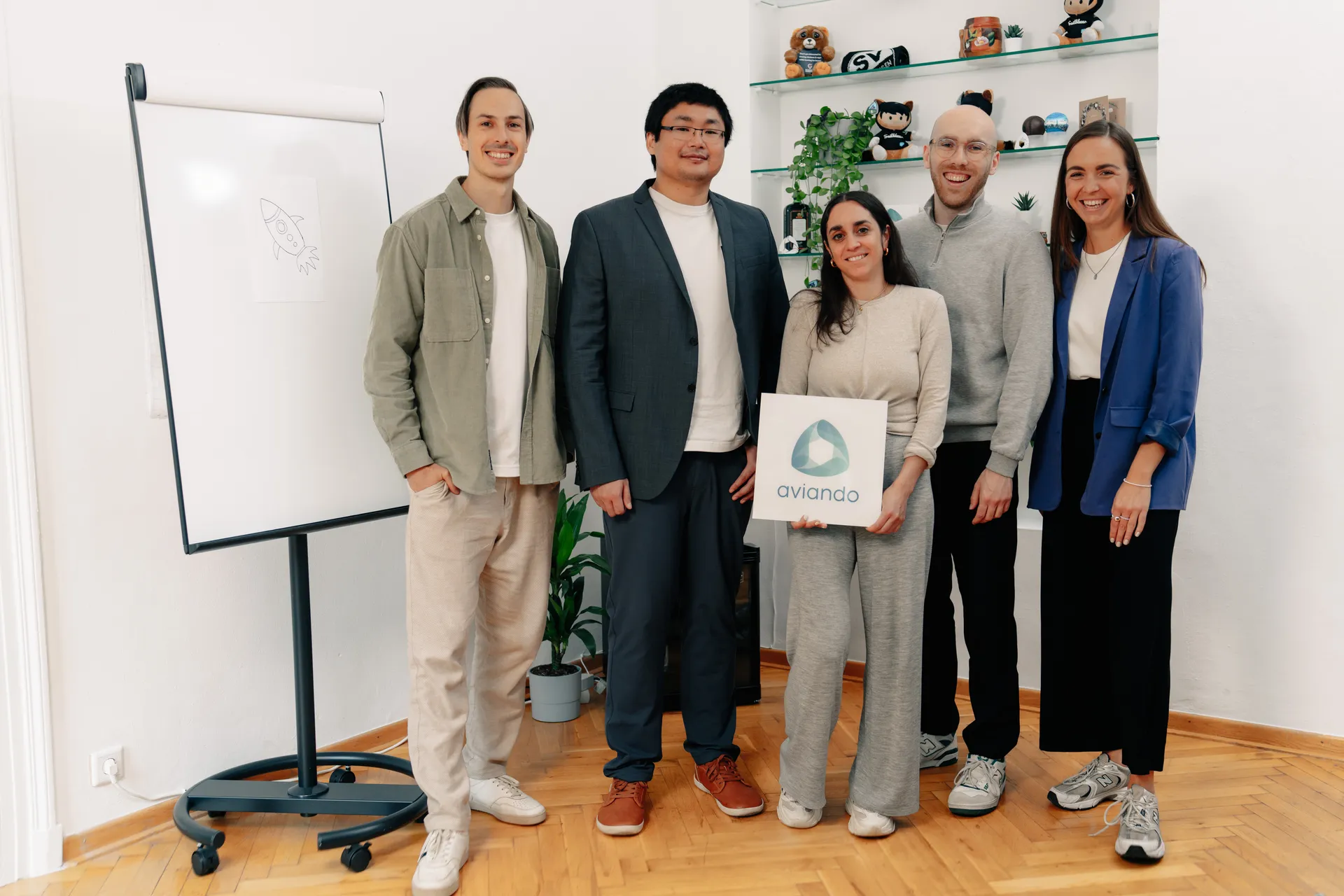
See marketing use casesChris Uhrig, co-founder and technical lead at Aviando, looks at your sales process, your CRM setup and possible AI use cases together with you. You work out where a quick pilot makes sense and how your team benefits from it day to day.