


01
Grown Salesforce setup
Salesforce is in use, but structures have grown over years. Fields, processes, permissions and reports no longer match current requirements cleanly.
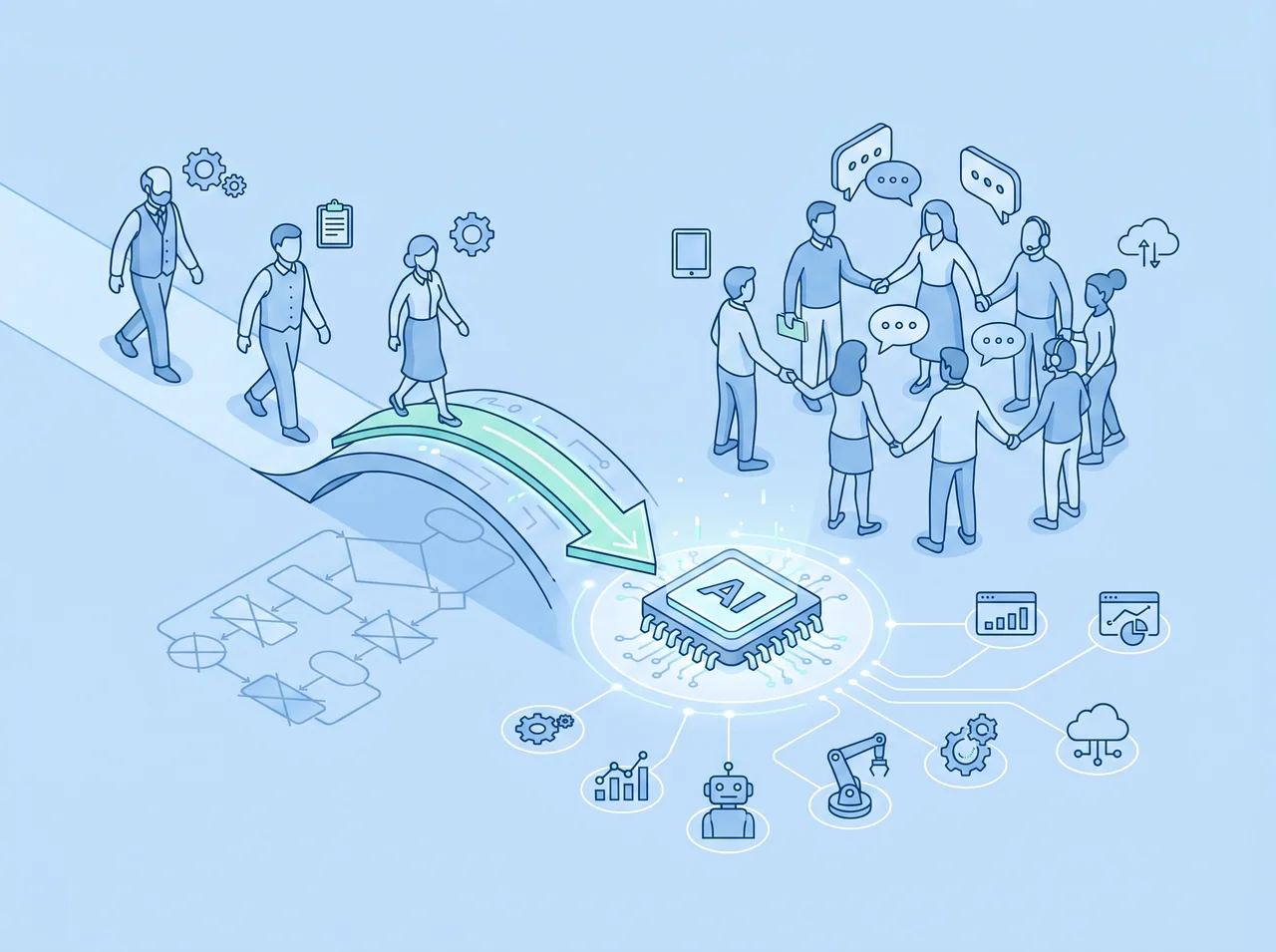
Many companies know that processes, data and systems have to work together better. What often stays unclear is where to start. Aviando helps you position Salesforce strategically, set priorities and develop a roadmap that creates impact in everyday work.
Salesforce projects often arise from concrete problems. Sales needs better forecasts. Service wants to respond faster. Marketing needs reliable customer data. Management wants more transparency.
Every requirement is understandable. It gets difficult when many parallel initiatives emerge from them that do not contribute to a shared goal.
This is exactly where a digitalisation strategy comes in. It orders requirements, connects business units and translates goals into actionable steps. Not everything has to be built at once. What matters is that the right things happen first.
Salesforce can map a lot. That is exactly why, before delivery, a clear decision is needed about which processes should really improve.
Without strategy you quickly end up with additional fields, complex automations and inconsistent reports. The system grows, but the value stays hard to grasp.
A good digitalisation strategy answers different questions. Which goals are relevant for your company? Where do costs, delays or data problems arise today? Which teams need which information? Where does automation pay off? When does AI make sense, and which foundation is still missing for it?
These answers do not produce a theoretical paper. They produce a plan that makes decisions easier.
Salesforce is in use, but structures have grown over years. Fields, processes, permissions and reports no longer match current requirements cleanly.
Business units want new features, IT sees technical dependencies and management expects fast results. Without a roadmap, topics compete for attention.
Customer information sits in Salesforce, ERP, the website, support tools or spreadsheets. As a result, consistent analyses and a shared view of customers are missing.
Agentforce or other AI applications are on the table, but data quality, permissions and use cases are not yet clarified enough.
Teams work with Salesforce but find processes cumbersome. The result is workarounds, parallel lists and falling trust in the platform.
Changes to the system happen on the side, often without a fixed process. It is not clarified who decides on new fields, automations and permissions, and who maintains them.
We start with your current situation. Which goals is your company pursuing? Which processes slow things down today? Where do manual tasks arise? Which data is missing for decisions? We then order requirements by value, effort, urgency and dependencies. That creates clarity about which measures should be delivered first.
Seven building blocks that make a Salesforce strategy work - as one coherent framework, not a loose list.
We look at sales processes, service workflows, marketing handovers, management reporting and interfaces to other systems. Throughout, the question is always where Salesforce can create real value.
Good decisions need reliable data. We review data quality, duplicates, required fields, responsibilities, sources and necessary integrations.
Salesforce rarely stands alone. That is why we consider ERP, the website, document management, collaboration, finance and further applications as part of the overall landscape.
Recurring tasks can noticeably relieve teams. We identify workflows that can be automated without making your setup unnecessarily complex.
Before Agentforce or other AI applications can be used sensibly, use cases, data basis and governance have to be right. We check where an entry point is realistic.
New processes need acceptance. We define which teams to involve, what communication should look like and which training formats make sense.
A strategy has to be measurable. Together we define which metrics make progress visible and which reports support decisions.
You know Salesforce has to be developed further, but not which topics should come first. Aviando creates structure and makes priorities decidable.
Before a new Salesforce project, requirements, data, roles and integrations should be clarified cleanly. That makes the later delivery safer.
The system has grown and needs new order. We identify unnecessary complexity, technical debt and concrete improvement opportunities.
Agentforce or other AI topics should not be tested in isolation. We assess which use cases make sense and which foundation has to be built first.
Sales, service, marketing, IT and management often look at Salesforce differently. A shared target picture creates orientation for everyone involved.
Reports exist but give no clear answer to leadership questions. We define which metrics count, where they come from and who owns them.
After a clear digitalisation strategy, your company knows which topics take priority and why they are relevant.
In the end you receive a roadmap that connects strategic goals with concrete delivery.
This includes a clear target picture, prioritised measures, recommended next steps, relevant dependencies and an assessment of which initiatives bring impact in the short term.
Optionally, Aviando can guide the delivery directly. From implementation and integration through Agentforce use cases to training, support and change management.
When the roadmap becomes a concrete project, we support building or rebuilding your Salesforce setup.
Learn moreWhen AI is part of your roadmap, we assess suitable use cases, data basis and delivery steps.
Learn moreWhen new processes are introduced, acceptance decides success.
Learn moreThorsten Winkels, co-founder and managing director of Aviando, looks with you at your current situation, open requirements and sensible next steps. Together you clarify where strategy is needed and which measures can show impact first.