




Skip to content
Aviando consultant working on a laptop
Salesforce integration

Connect Salesforce with the systems that move your business

Data only delivers value when it is available where teams work every day. Aviando integrates Salesforce into your existing IT landscape, synchronises information reliably and creates a shared foundation for sales, service, marketing, finance and operations.

Smart interfaces instead of new data silos

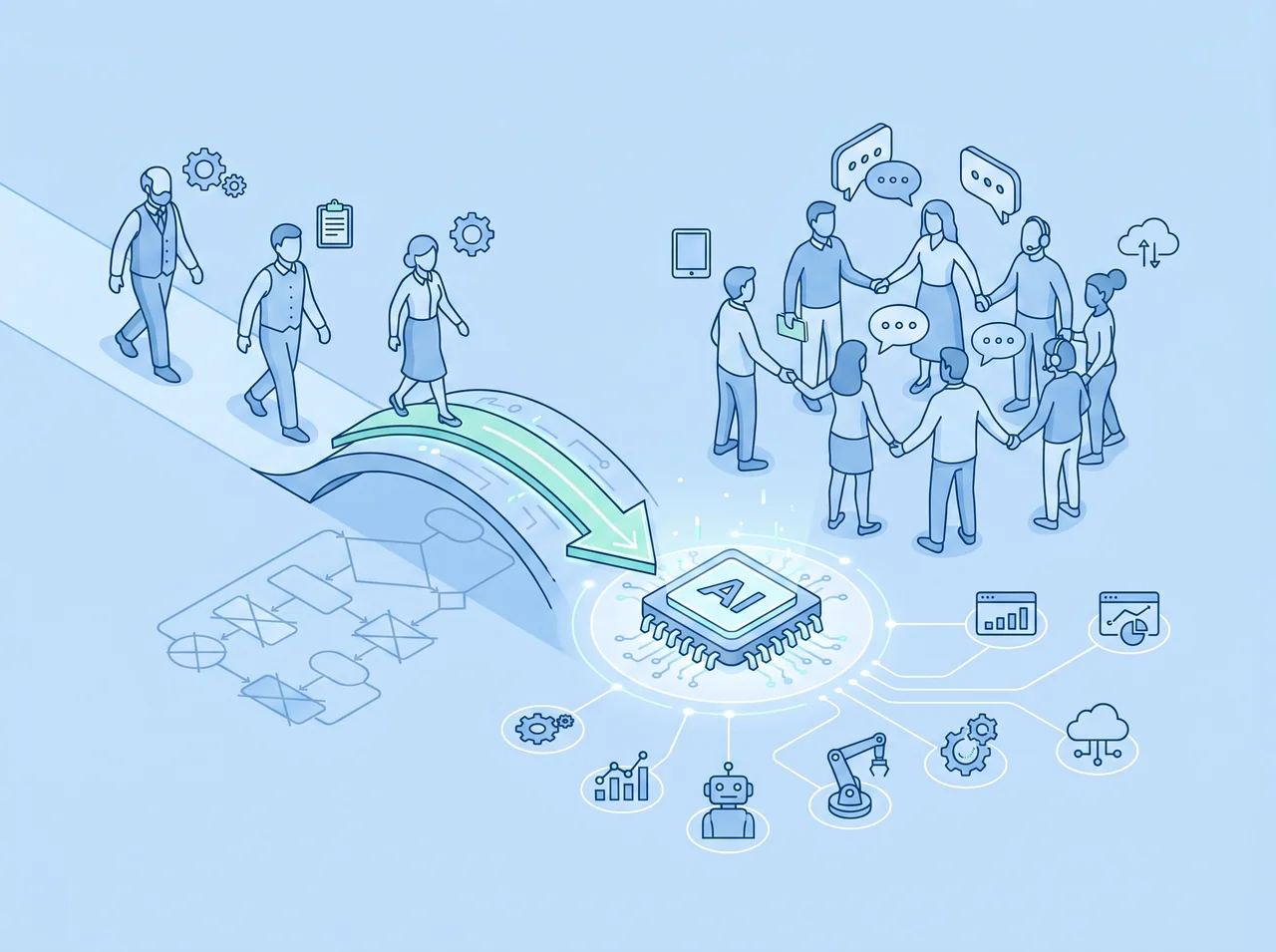
Many companies run Salesforce alongside ERP, the website, accounting, document management, project tools or further line-of-business applications. As soon as these applications are not connected cleanly, the result is duplicate upkeep, inconsistent information and slow decisions.

Aviando makes sure Salesforce does not work in isolation. We review your existing system landscape, clarify the relevant data flows and develop interfaces that make sense on the business side and hold up technically.

The result is not yet another tool among many, but a CRM that connects processes and provides information where it is needed.

Foundations

Why integration is decisive

A strong Salesforce setup does not depend on good configuration alone. What also matters is how reliably data from other sources arrives, gets updated and can be used.

When systems stay separate, typical problems appear: teams work with different data states, reports lose meaning, manual exports cost time and handovers become error-prone.

A clean integration reduces this friction. Information flows automatically between relevant applications, responsibilities become clearer and workflows are easier to steer.

Integrations

What we integrate

STEP 01 / 05

ERP and finance

Order data, invoices, master customer data or payment information can be connected from ERP and finance systems with Salesforce. This gives sales, service and management a better view of customer relationships and commercial context.

Services

Our integration services

Integrate systems into Salesforce

We create interfaces between Salesforce and your existing IT. We look not only at technical options, but also at data quality, processes, roles and later maintainability. The goal: a connected setup that exchanges information reliably and stays easy to follow in everyday use.

Synchronise data

Not every piece of information has to flow in real time. Some data needs immediate updates, other data is fine on a scheduled or event-based basis. Aviando helps you define sensible synchronisation logic. That makes data reliably available without adding unnecessary complexity to your system.

Prepare and run migration

For new Salesforce projects or larger evolutions, existing data has to be reviewed, cleaned and transferred. We support data model, mapping, quality assurance and migration. Existing information is prepared so it stays usable in Salesforce and no important context is lost.

Use middleware sensibly

Some integrations can be delivered directly. Others need middleware when several applications, data flows or security requirements interact. We assess which architecture makes sense and make sure the solution stays scalable, understandable and operable.

In detail

Our approach

01

Understand first, then connect

Before any technical delivery we clarify which systems are relevant, which data is really needed and which processes should improve. This is not only about interfaces. What matters is which information is needed at which point and who is responsible for it.

02

Architecture with a sense of proportion

An integration should help, not add extra burden. That is why we develop solutions that fit the existing infrastructure and do not create more complexity than necessary. Depending on the starting point, we work with direct interfaces, middleware, API connections or existing platform capabilities.

03

Delivery with operations in mind

After go-live an integration has to run stably, be clearly documented and adapt when things change. That is why Aviando pays attention to monitoring, error handling, clear responsibilities and traceable documentation. Your team should understand how the connection works and what to keep in mind in operation.

Use cases

Typical use cases

Make customer data centrally usable

Customer information from different applications is brought together in Salesforce. Sales, service and management then work with a more reliable view of accounts, contacts and activities.

Reduce manual data upkeep

When information is transferred automatically, the effort for exports, imports and duplicate entry drops. Teams gain time and sources of error shrink.

Make reporting more reliable

Reports are only as good as their data basis. Integrated systems improve the quality of metrics, forecasts and operational analyses.

Improve handovers between teams

Sales, service, finance and operations often need the same information, but in different contexts. A clean integration ensures relevant data is available at the right time.

Keep using existing IT

Not every system has to be replaced. Often the greatest value comes from connecting existing applications with Salesforce sensibly.

Impact

Result

After a successful integration, Salesforce no longer works detached from the rest of your IT. Data becomes more consistent, processes more transparent and teams can make decisions faster.

  • Sales sees relevant customer information. Service spots context earlier. Marketing can use data more deliberately. Management gets better reports. IT gains more control over interfaces, data flows and system dependencies.
  • The result is a Salesforce environment that is not only technically connected, but operationally supports your business.

What every team gains

  • Salessees relevant customer information on the account
  • Servicespots connections earlier
  • Marketingcan use data in a more targeted way
  • Managementgets better reports
  • ITgains control over interfaces and data flows
Intro call

Sounds like an integration that would bring more calm to your Salesforce setup?

Thorsten Winkels, co-founder and managing director of Aviando, looks with you at your current system landscape, possible data flows and sensible next steps. Together you clarify where an integration delivers real value and which solution fits your company.

Thorsten Winkels, Co-Founder & Managing Director at Aviando
Thorsten Winkels
Co-Founder & Managing Director