
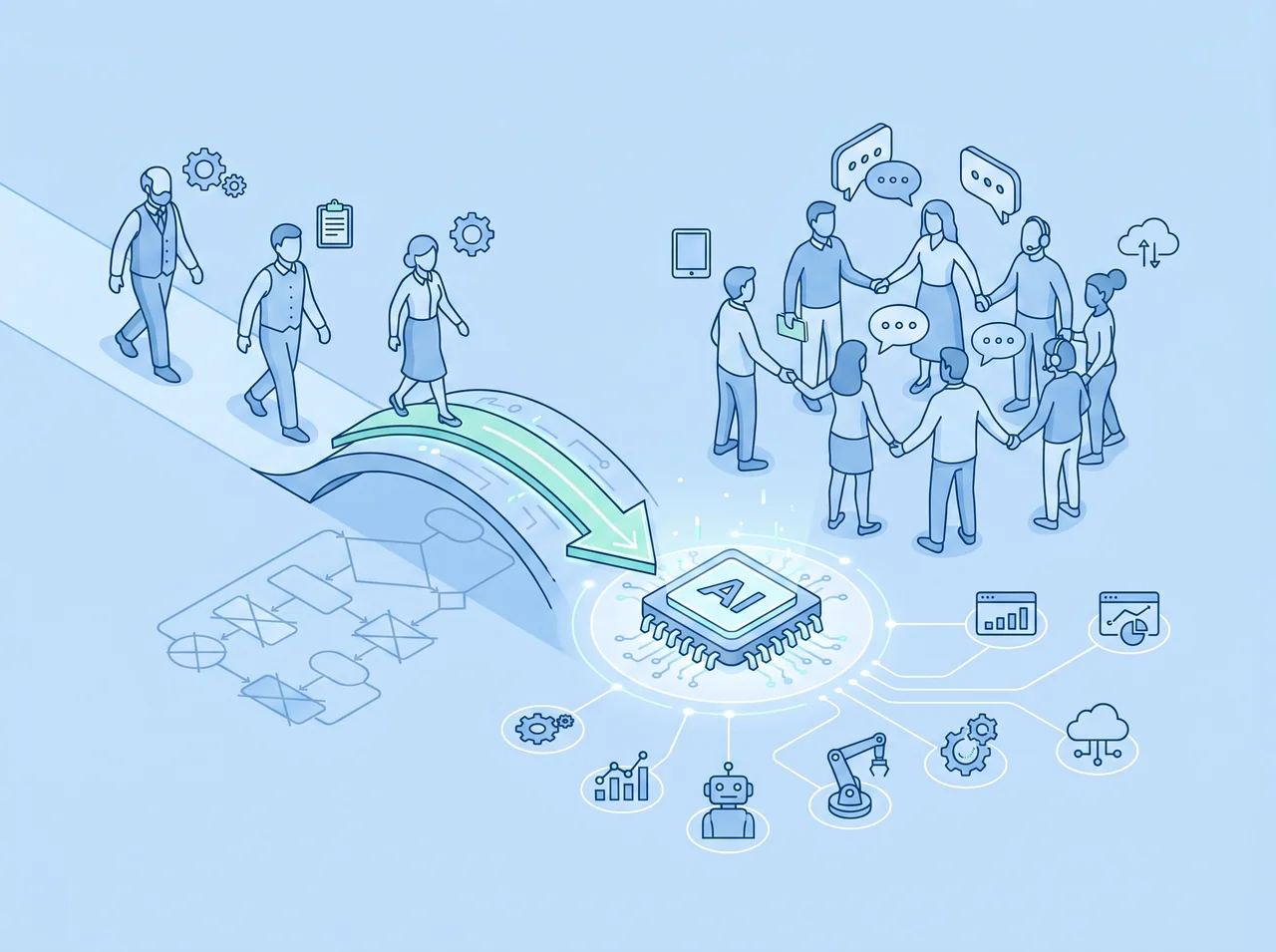




Stakeholder analysis
First we clarify which groups are affected and which expectations exist. We consider business units, leadership, IT, admins, key users and operational users.

New processes change habits, roles and expectations. Aviando helps you involve teams early, build confidence and introduce Salesforce so adoption does not have to be forced, but becomes understandable.
Many Salesforce projects focus heavily on features, data and technical delivery. That is important, but rarely enough.
What matters is whether people understand why workflows are changing, which benefits arise and how they can work confidently in the new setup. Without this orientation, uncertainty, follow-up questions, workarounds or rejection appear.
That is why Aviando does not treat change as an afterthought training session. We factor in acceptance from the start: in the analysis, in the process design, during the implementation and after launch.
Salesforce changes more than interfaces. The platform influences how leads are handled, customers are looked after, opportunities are assessed, cases are handed over and reports are used.
When these changes are not explained, distance appears. Users see extra work but no personal benefit. Leaders expect better data without responsibilities being clarified. Admins receive many follow-up questions because roles, rules or processes were not understood enough.
Good change management creates connection here. It translates project goals into understandable messages, makes effects tangible and ensures people know what is changing and why it matters.
Acceptance starts earlier than the training. We involve relevant roles before new processes are finally decided. That makes objections visible, requirements better understood and later resistance reduced.
People do not need long announcements, but clear orientation. What is changing? Which benefits arise? Who is affected? From when does a new workflow apply? We structure exactly these questions in an understandable way.
A sales team needs different content than service, marketing, management or internal admins. That is why we develop training, materials and formats that match tasks, responsibility and prior knowledge.
Questions arise after launch. Aviando guides this phase with office hours, feedback loops, documentation and targeted support so small uncertainties do not turn into big adoption barriers.
Change should become visible. We review usage behaviour, data quality, process throughput and feedback from the teams. That makes it clear where further support is needed.
First we clarify which groups are affected and which expectations exist. We consider business units, leadership, IT, admins, key users and operational users.
A good rollout needs clear timing, understandable content and suitable channels. We structure messages so they give orientation, not just information.
Key users act as multipliers in the company. They gather feedback, support colleagues and help anchor new workflows in practice.
Training is aligned with real processes. Instead of abstract system tours, we work with typical tasks, concrete examples and traceable scenarios.
Knowledge has to stay available after the training. A tailored help center bundles guides, process rules and answers to common questions.
Launch is a critical moment. We support teams in the first days and weeks, prioritise follow-up questions and spot early where adjustments make sense.
After the rollout it shows which processes work and where friction arises. These insights flow into improvements, further training or smaller adjustments.
A CRM project should be guided from the start so teams understand the value and enter go-live prepared.
Salesforce is in place but not used consistently. New structures, better processes and clear communication should bring trust back.
Reporting, automation, integration or Agentforce change existing workflows. Users need orientation so new possibilities are actually embraced.
Required fields and rules alone rarely solve the problem. Teams have to understand why clean data is relevant and how to maintain it in everyday work.
Sales, service, marketing and management often pursue different goals. Change management helps clarify expectations and establish shared ways of working.
Teams understand faster why Salesforce is relevant and how new processes help them in everyday work. Follow-up questions become more focused, data quality rises and workarounds decrease.
Aviando does not see change management as a one-off training shortly before go-live.
It is also not about covering up resistance with nice presentations. We work pragmatically: listen, assess, explain, enable and improve.
That keeps change tangible. People know what is expected of them, where they get support and how to work confidently with the new setup.
When Salesforce is built from scratch, change management should be integrated directly into project planning, training and go-live preparation.
Learn moreAfter the rollout your team needs knowledge, documentation and reliable support in operation.
Learn moreWhen several changes are coming up, a roadmap helps order priorities and communication steps sensibly.
Learn moreThorsten Winkels, co-founder and managing director of Aviando, looks with you at your Salesforce project, the affected teams and possible hurdles in the rollout. Together you clarify which support makes sense and how adoption can be improved measurably.